
Trap Maintenance
When properly maintained, the Mosquito Magnet can run at its best for many years. When running 24 hours a day, 7 days a week, both the propane tank and the attractant last for a full 21 days. Replacing them on time will keep your catch rate high and continue breaking the mosquito breeding cycle in your yard.
Starting Your Mosquito Trap in the Spring
Make sure to start running your trap before mosquitoes start breeding. Once the temperature reaches 50°F consistently, mosquito eggs that have been dormant through winter will begin to hatch. Female mosquitoes that spent the cold months sheltered in basements and trees are now ready to emerge and lay eggs. You need to be ready before they are.
Starting Your Mosquito Trap in the Spring
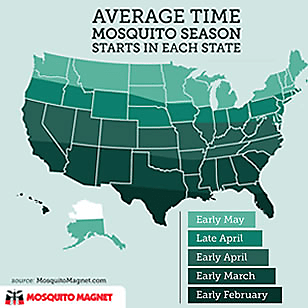
Be sure to start running your mosquito trap before mosquitoes start propagating. Perhaps you’re wondering “when does mosquito season start?” Once the temperature reaches 50°F consistently, mosquito eggs that remained dormant during the winter will begin hatching. Female mosquitoes that have spent the summer in protected areas like basements and trees are now ready to come out and lay their eggs. Make sure that you’re ready!
This map shows you the average start time for your area.
Mosquito Magnet Start-Up Tips
- Step 1 — Remove the trap cover or bag and let the trap dry out completely before switching it on. If there is a lot of moisture, leave it in the sun for a day or two first.
- Step 2 — Reattach the regulator hose to the propane tank.
- Step 3 — Reattach the power adapter if applicable.
- Step 4 — Turn the propane tank on and follow standard startup instructions. Always begin the season with a fresh net and a new attractant cartridge.
Factors Affecting the Start of Mosquito Season
With rising overall temperatures, mosquitoes are hatching earlier each spring and the mosquito season has grown longer. One mosquito species has even shortened its development cycle, producing more generations per year. Mosquitoes are not only arriving earlier but staying later as the first frost is being delayed in many regions.
Mosquitoes can also be a bigger problem during droughts, as drains and water sources become small and stagnant ideal for egg-laying. When rain finally arrives after a drought, eggs hatch and larvae emerge in ponds that have few natural predators. Being prepared before mosquito season starts is the smartest preventative measure any homeowner can take.
Storing Mosquito Traps for the Winter
- Step 1 — Turn off your Mosquito Magnet.
- Step 2 — Turn off and disconnect the regulator from the propane tank.
- Step 3 — Place the regulator in a plastic bag and seal it tightly to keep out dirt, debris, and insects.
- Step 4 — Disconnect the battery (applicable on certain models only) and place it in a plastic bag.
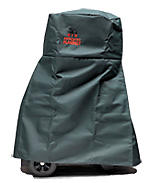
- Step 5 — Place the trap cover over the unit and secure the velcro strips to keep insects from nesting inside and to prevent dust and moisture from getting in.
Store the trap in a garage or shed during the off-season. Remove and discard any open attractant cartridges. Also discard the net before storing.
In-Season Maintenance
Follow these steps every 21 days as your regular maintenance routine:
- Replace the attractant. Using an attractant is critical to the trap’s performance. After 21 days, the cartridge looks the same but is no longer effective the lure has already been released. If you do not change it on time, your catch rate will drop.
- Replace the mosquito net. If the net is clogged, torn, or damaged, replace it immediately. Even during periods of low catch, the net should still be replaced because pollen, dust, and dirt restrict airflow and reduce efficiency.
- Refill the propane tank. Have your tank refilled by an authorized propane dealer. It is not recommended to use a tank-swapping service. If using a new tank, ask the dealer to purge it as new tanks may contain air.
- Check the side vents for trapped insects. Remove and inspect the inside of the side vents to make sure no insects are blocking them. Clogged vents reduce airflow and lower your catch rate.
Keep the trap clean. Periodically wipe the outside of the trap with a clean, damp cloth to keep it in good working condition.